ServicesStorm Damage Repair
Storm Damage Repair in Lexington, OK
After hail or a hard wind, a roof can look normal from the driveway while seal strips, shingle mats and pipe boots are already broken. We locate that damage, photograph it, explain how your insurance claim works and repair it with fastening and sealing that holds.
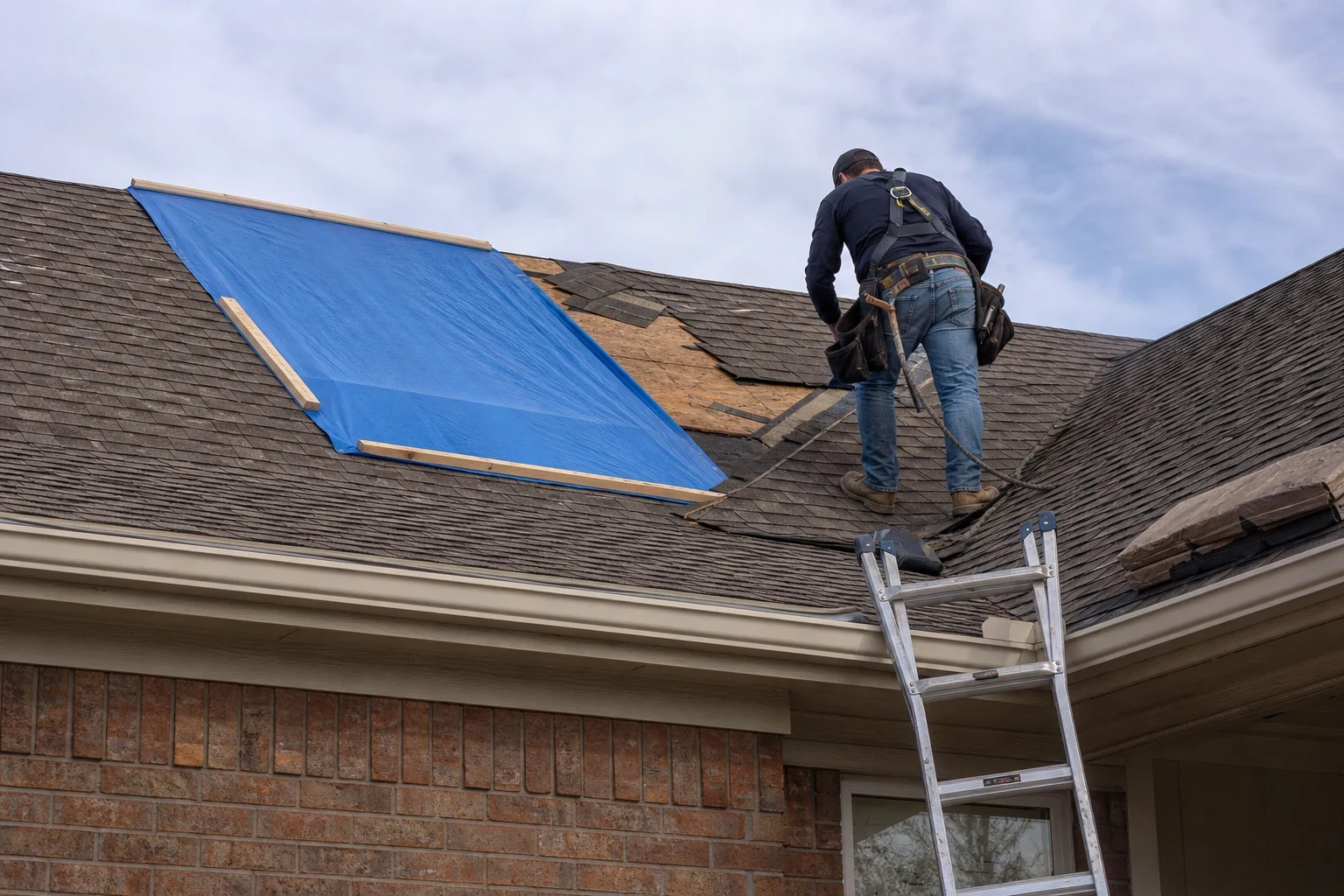
What storm damage repair actually fixes
A storm rarely tears a roof open. More often it breaks the parts that keep water out: the adhesive strip that holds each shingle tab down, the granule layer that shields the asphalt from UV, the rubber boot around a plumbing vent. The roof still looks fine, then starts leaking a season or two later.
Storm damage repair means finding those failures, documenting them for your insurer and fixing them with the right materials and fastening. When damage is scattered, we repair the affected areas. When hail has bruised most of the field, we tell you plainly that roof replacement is the better answer and show you why with photos.
We hold an Oklahoma residential roofing license and an Oklahoma general contractor license, so the shingles, flashing and the decking underneath are handled by one company.
What the work includes
Full roof and soft-metal inspection
We walk every slope and check the soft metals: gutters, downspouts, ridge vents, flashing. Dents in aluminum and galvanized steel show hail size and direction, which helps confirm the damage on the shingles.
Photo documentation
Each hit, crease and tear is chalked and photographed with a close-up and a wider shot for location. You get the set to share with your insurance company.
Temporary dry-in
If a slope is open or decking is exposed, we tarp it and fasten the tarp so wind cannot get under it, keeping water out of your home until the repair is scheduled.
Shingle replacement with proper fastening
Damaged shingles come out without breaking the seal on the courses around them. Replacements go in with the correct nail count, placed in the nailing strip, and tabs are hand-sealed where the factory strip will not bond on its own.
Flashing, boots and vents
Cracked pipe boots, dented roof vents and bent step or counter flashing are replaced rather than caulked over. Caulk is a patch that dries and splits within a few summers.
Decking and gutter repairs
Soft or cracked sheathing is cut out and replaced before new shingles go down. Crushed gutter sections are repaired so runoff still clears the fascia; see our Gutters page for full gutter work.
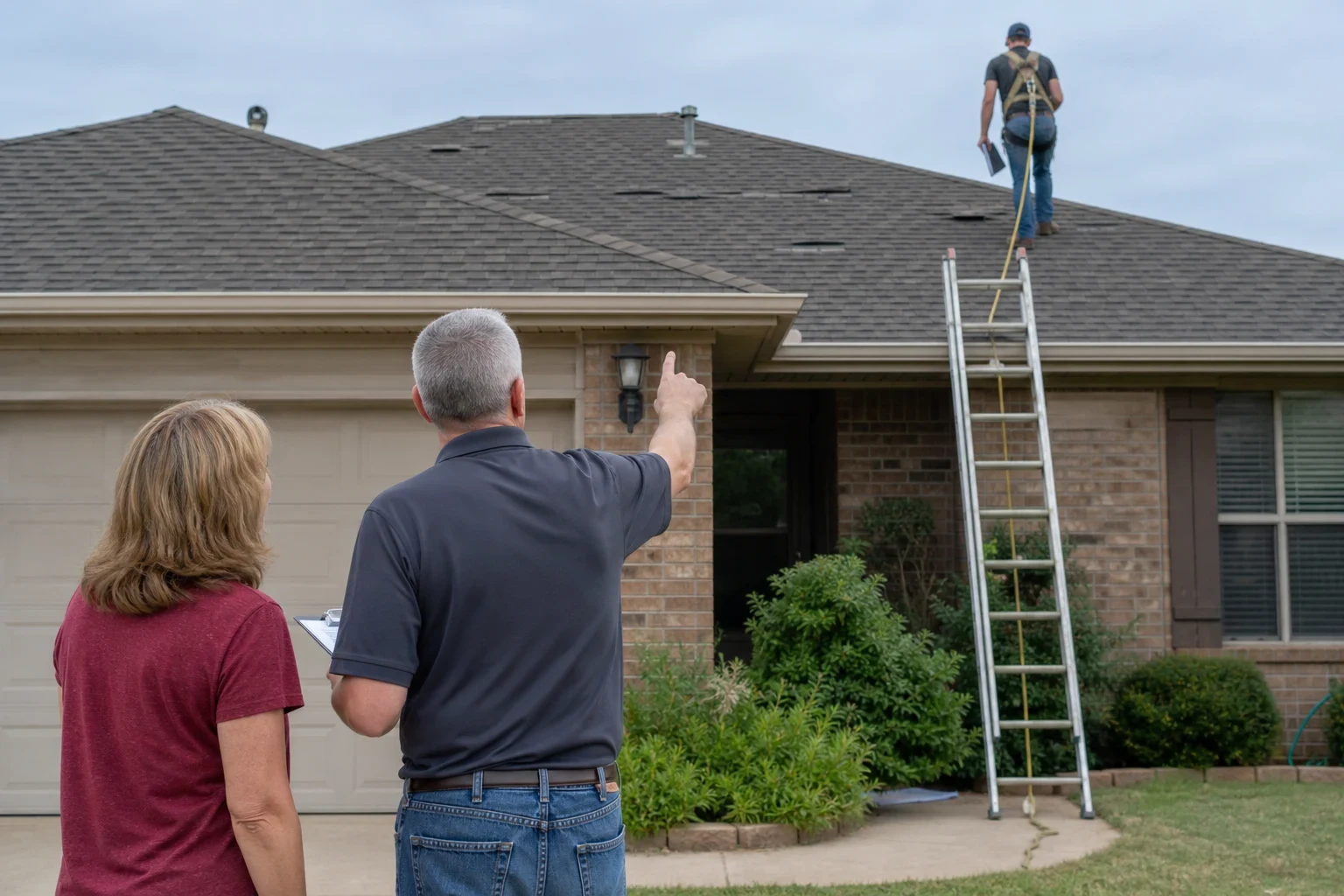
Clues the last storm hurt your roof
- Dark grit piling up at downspout outlets
- A heap of granules after hail means impacts knocked them off the shingles. Without that layer, sunlight breaks down the asphalt and the shingle ages quickly.
- Creased or lifted tabs
- Strong gusts can fold a tab back past its seal line and leave a straight crease across it. That shingle has lost its bond and much of its strength, so the next wind can tear it away.
- Dents in vents, gutters or the AC unit
- Hail that dented metal at ground level struck the roof with the same force. Dented ridge caps and roof vents deserve a closer look.
- Missing shingles or exposed felt
- Visible underlayment means water is now depending on a layer that was never designed to be the main barrier.
- New ceiling stains after rain
- A fresh stain or drip near a chimney, skylight or plumbing vent usually traces back to flashing or a pipe boot the storm cracked.
How a storm repair job runs
- 1
Inspection and photos
We climb every slope, chalk the damage and photograph it. Then we go through the pictures with you and give a straight answer on repair versus replacement.
- 2
Insurance walkthrough
We explain how a claim usually moves and what an adjuster tends to check. If it helps, we can be there when your adjuster inspects and show each spot we marked. Your insurer decides coverage; our job is making sure nothing gets missed.
- 3
Written line-item estimate
You receive a written estimate that lists shingles, flashing, boots, vents, decking and labor, so you can line it up against the insurance scope item by item.
- 4
Repair day
We cover landscaping and protect siding, tear out damaged materials, replace any bad decking and install new components with correct nailing and sealing. Before we leave, a magnet sweep pulls stray nails from the yard and driveway.
- 5
Final check
We walk the finished repair with you and hand over completion photos for your records and your insurer.
What sets the price of a storm repair
We price each storm job from the damage we actually find on your roof, never from a flat rate. Your policy and deductible decide your out-of-pocket share. The written line-item estimate shows where every charge comes from.
- How far the damage spreads
- Three or four wind-creased tabs on a single slope take a short visit. When hail has bruised shingles on most slopes, repair stops making sense and the conversation shifts toward replacement.
- Matching the existing shingles
- Discontinued or weathered shingles are hard to match in color and profile. Sourcing a close match, or redoing an entire slope so it looks uniform, changes the material cost.
- What the decking looks like
- Water entering through a torn spot can soften the plywood or OSB below. Cutting out and replacing that sheathing adds material and labor.
- Pitch and access
- A steep roof needs more safety setup and slows every task. Tight side yards that limit ladder placement and debris hauling also add time.
- Metal parts
- Dented roof vents, ridge caps, flashing and gutter sections are separate parts on top of the shingles, and each one adds to the total.
Storm damage questions
- How soon after a storm should I have my roof checked?
- As soon as it is practical. Many insurance policies limit how long you have to file, and hail bruises are easiest to document while they are fresh. Every extra week also gives a broken seal strip another chance to let wind and water under the shingle.
- Do you work with my insurance company?
- We explain the process, supply photos and a line-item estimate, and can be on the roof with your adjuster to show the documented damage. We do not act as your adjuster or negotiate for you. Your insurer makes the coverage decision.
- Is it possible to fix only the shingles that were hit?
- In many cases, yes. When damage is limited to a few spots and we can find matching shingles, a spot repair is the honest recommendation. We lift the damaged pieces without breaking the bond on the courses around them, then nail and hand-seal the replacements.
- How can hail damage be there if I don't see leaks?
- Hail fractures the fiberglass mat under the granules without punching a hole. The shingle keeps shedding water for a while, then the bruise cracks and leaks. That is why we inspect the roof surface itself instead of waiting for stains inside.
- Do you repair storm damage on commercial buildings too?
- Yes. We also hold an Oklahoma commercial roofing license, so if the same storm hit your business, our Commercial Roof Repair page explains how we handle flat and low-slope roofs.
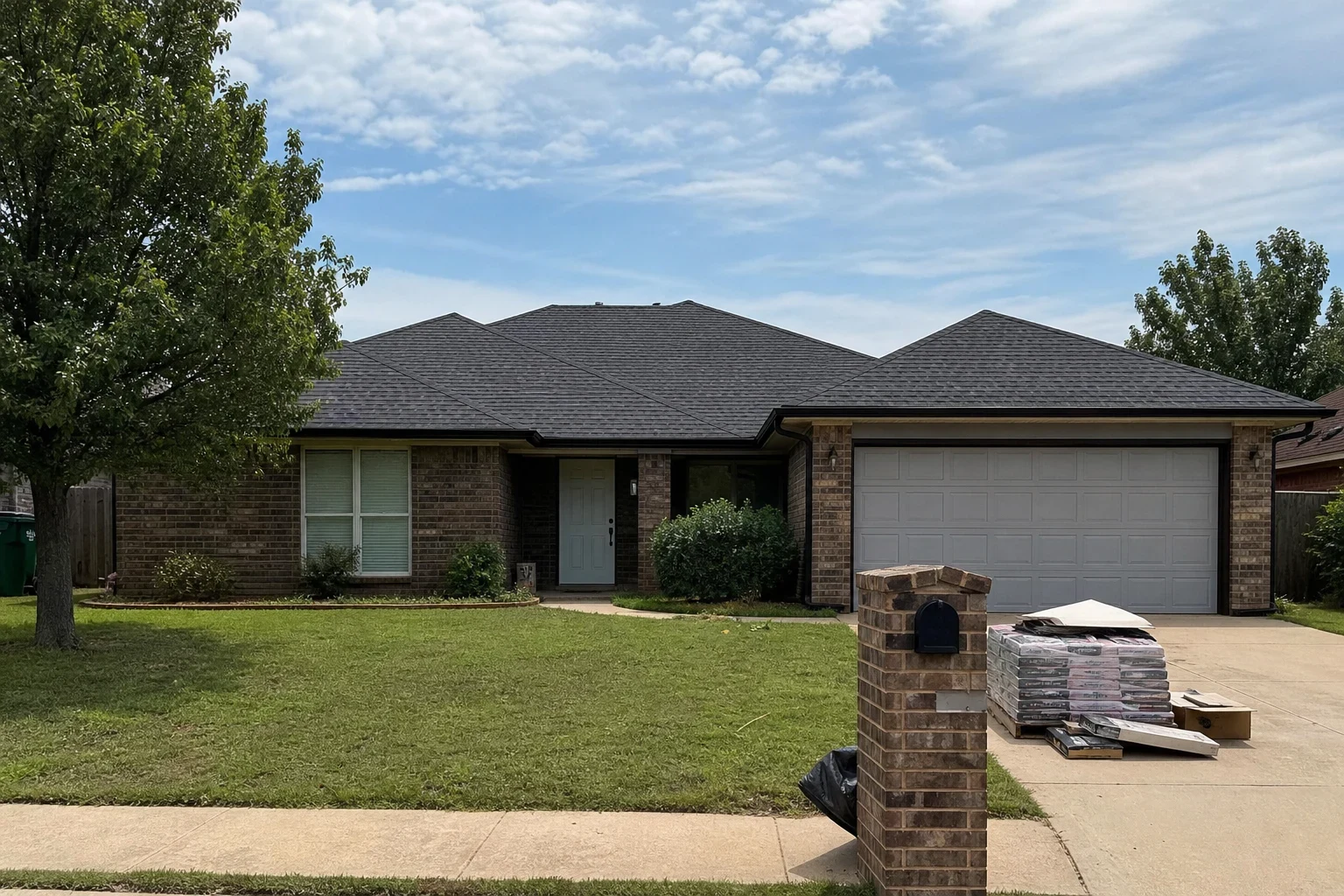
Get the storm damage on record
We will inspect the roof, photograph what the storm left behind and give you a written estimate you can hold up next to your insurance scope.