ServicesCommercial Roof Repair
Commercial Roof Repair in Lexington, OK
Most leaks on a flat or low-slope roof start at a few predictable spots: a lap seam, the flashing around a rooftop unit, a clogged drain or a backed-out fastener. We find the actual entry point, repair it with compatible materials and tell you plainly how the rest of the roof is holding up.
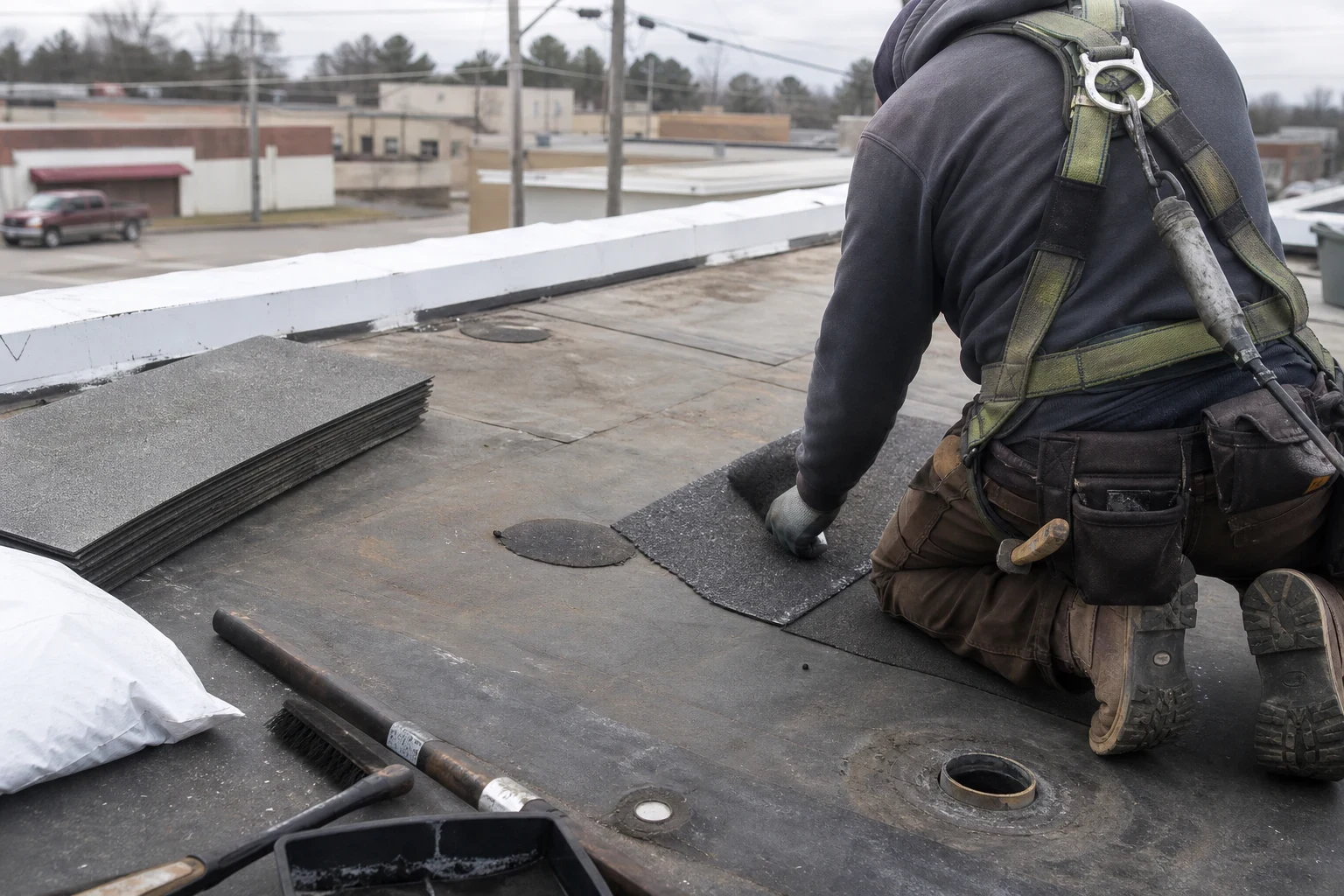
Repairs That Fix the Cause, Not the Ceiling Stain
Water on a commercial roof rarely enters where it shows up inside. It can travel along a deck flute or insulation board for several feet before it drips through a ceiling tile. That is why we start on the roof, not under it, and work back from the stain to the seam, penetration or drain that is actually failing.
We repair the common low-slope systems: TPO and PVC single-ply, EPDM rubber, modified bitumen, built-up gravel roofs and exposed-fastener metal panels. Each one fails differently and each needs its own repair method. A TPO seam is heat-welded, EPDM is spliced with primer and seam tape, and modified bitumen is patched with a compatible cap sheet. Mixing those up is how a patch starts leaking again a season later.
Our work is backed by an Oklahoma commercial roofing license and an Oklahoma general contractor license, which matters when a repair involves rooftop equipment curbs, framing at a parapet or work that touches other trades.
What a Commercial Roof Repair Includes
Leak tracing from the roof surface
We inspect seams, penetrations and terminations around the reported leak area and beyond it. Where needed, we probe for wet insulation, which often marks the real path of the water.
Seam and membrane repair
We clean and prep the membrane before any patch goes down. Weathered TPO and EPDM need scrubbing and primer, or a new patch simply sits on chalky surface oxidation and lets go.
Flashing at curbs, pipes and walls
Rooftop unit curbs, pitch pans, vent pipes and parapet base flashing are where most repairs end up. We replace cracked boots, refill or rebuild pitch pans and re-terminate flashing under a proper counterflashing or termination bar.
Drains, scuppers and ponding areas
We clear drain bowls, reset clamping rings and check that scuppers and overflow outlets are open. Standing water that stays more than two days after rain speeds up membrane wear, so we point out ponding and explain options for correcting it.
Metal panel fasteners and laps
Metal panels expand and contract every day, and over time that movement loosens screws and wallows out their holes. We swap those for larger-diameter fasteners fitted with fresh rubber sealing washers, then reseal end laps and ridge closures where the old sealant has hardened and split.
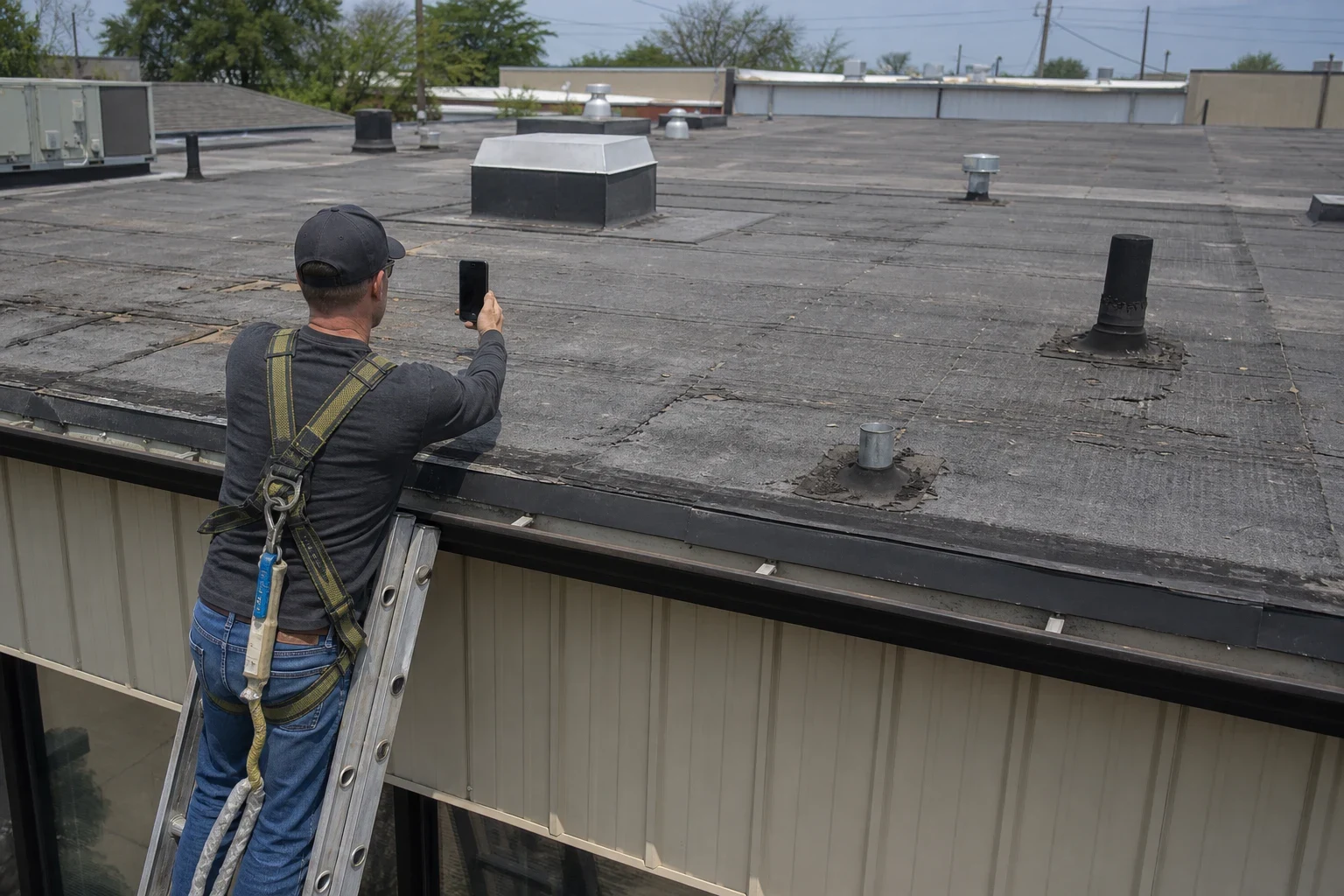
Signs Your Commercial Roof Needs Repair
- Stained or sagging ceiling tiles
- A tile that keeps staining after every rain means water has a steady path in. The longer it runs, the more insulation it soaks, and wet insulation loses most of its value.
- Seams lifting or edges pulling back
- Single-ply membranes shrink with age and heat. When a seam opens or the membrane pulls away from the perimeter edge metal, wind can get under it.
- Blisters and cracks in modified bitumen
- Blisters form when trapped moisture expands in the sun. Once they crack, water gets straight into the layers below.
- Water standing days after a storm
- Ponding usually points to a clogged drain, a sagging deck or crushed insulation. It also adds weight and wears the surface faster.
- Hail bruising or punctures
- Spring hail can fracture an aging membrane or dent metal panels at the fastener line. Damage like this is not always visible from the ground, so it is worth a look after a heavy storm.
How a Repair Visit Runs
- 1
Talk through the problem by phone
You tell us where the leak shows inside, what kind of roof you have if you know, and how roof access works at your building. We set a time that keeps disruption to your tenants or customers low.
- 2
Inspect and document
We walk the roof, trace the water path and photograph each problem we find. You see the failed seam or cracked boot for yourself, not just our word for it.
- 3
Explain repair options in writing
We give you a written scope listing each repair and the materials it uses. When the membrane has worn past the point where patching is a good use of money, you hear that from us directly, along with why commercial roof replacement may be the better spend.
- 4
Make the repair and clean up
We prep, repair and seal using products compatible with your existing system, then remove debris and old materials from the roof and the ground. Before we leave, we check drains and the repaired areas again.
What Moves the Cost of a Commercial Roof Repair
The price depends on what failed, how much of it, and what the roof is made of. A single reflashed pipe boot is a very different job from rebuilding flashing on several equipment curbs. We price from what we find on the roof and put it in a written scope before work starts.
- Roof system and material
- Heat-welded TPO, spliced EPDM, torch-applied or cold-applied modified bitumen and built-up roofs each need different tools and materials. Older or discontinued membranes can take extra prep to bond properly.
- Extent of wet insulation
- If water has soaked the insulation board, the wet section has to come out and be replaced before the membrane is closed up. Leaving it in traps moisture under a new patch.
- Penetrations and rooftop equipment
- Repairs around HVAC curbs, exhaust fans and conduit supports take more labor and careful detailing than open field areas.
- Access and building height
- Roof hatches, ladder access, multi-story walls and the need to lift materials all affect labor time.
Commercial Roof Repair Questions
- Can you repair my roof, or does it need to be replaced?
- Many commercial roofs have years left once seams and flashing are fixed. If moisture is spread across a large share of the insulation, or the membrane is brittle enough that new patches will not bond, repair stops being good value. We show you photos and explain which situation you are in.
- Do you work on flat roofs and metal roofs both?
- Yes. We repair TPO, PVC, EPDM, modified bitumen and built-up roofs, as well as exposed-fastener metal panel roofs on shops and warehouses in Lexington, Noble, Purcell and nearby towns.
- Will the repair disrupt our business?
- Most repair work happens entirely on the roof. We plan around your operating hours where we can, and we let you know ahead of time if any step creates noise or odor, such as torch work or adhesives near air intakes.
- Why did a previous patch fail?
- The usual causes are poor surface prep, a patch material that is not compatible with the membrane, or sealant used in place of real flashing. Caulk and roof cement crack under Oklahoma heat swings, so we rebuild the detail properly instead of layering more sealant on top.
- Are you licensed for commercial roofing work?
- Yes. We hold an Oklahoma commercial roofing license and an Oklahoma general contractor license.
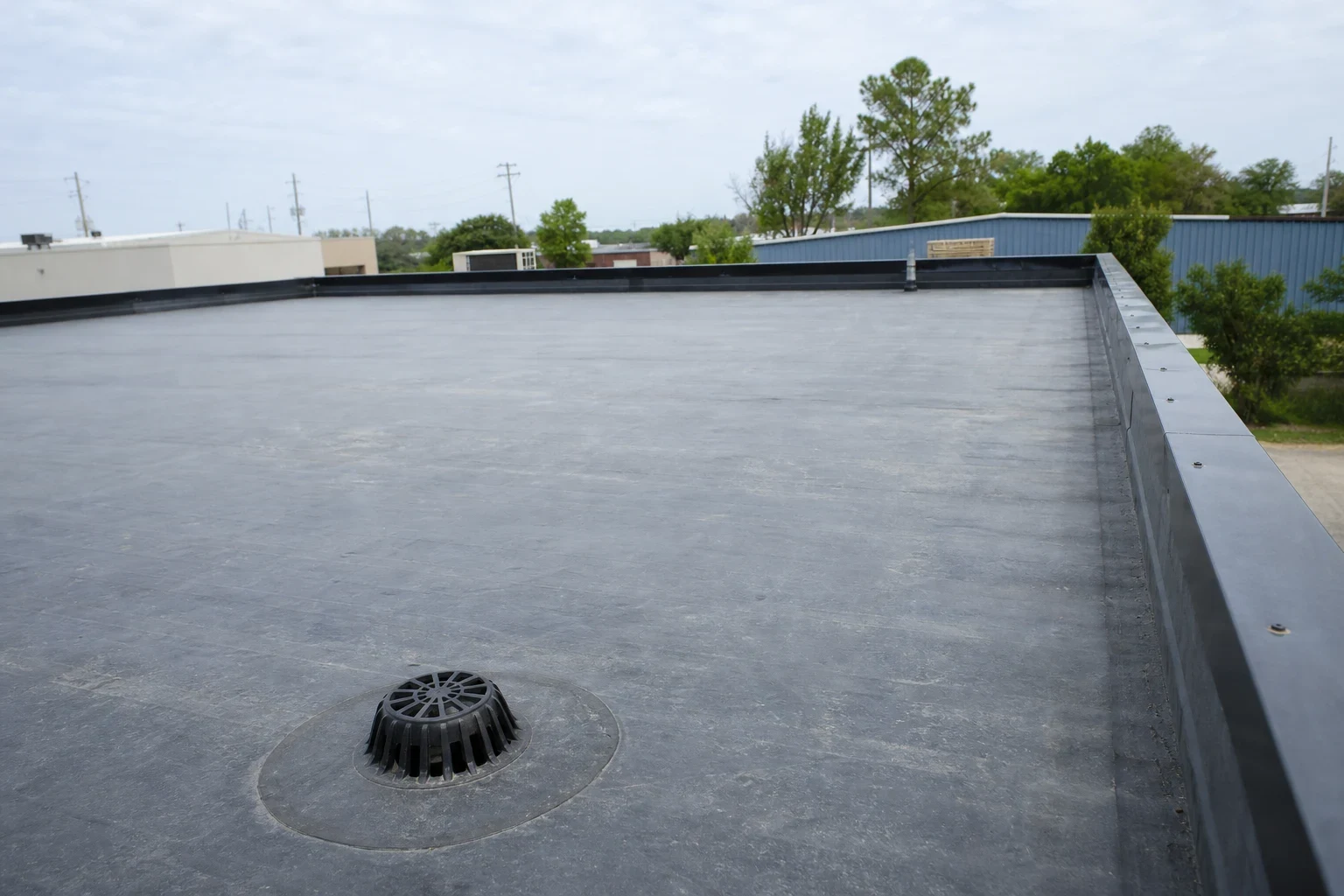
Get the Leak Traced to Its Source
Tell us where the water is showing and what your roof is made of. We will set up a visit, find the failing detail and walk you through a written repair scope.