ServicesCommercial Roof Replacement
Commercial Roof Replacement in Lexington, OK
We replace flat, low-slope and metal roofs on shops, offices and small commercial buildings. Most commercial roofs fail at seams, drains and edges, not in the middle of the field, so that is where we spend our time.
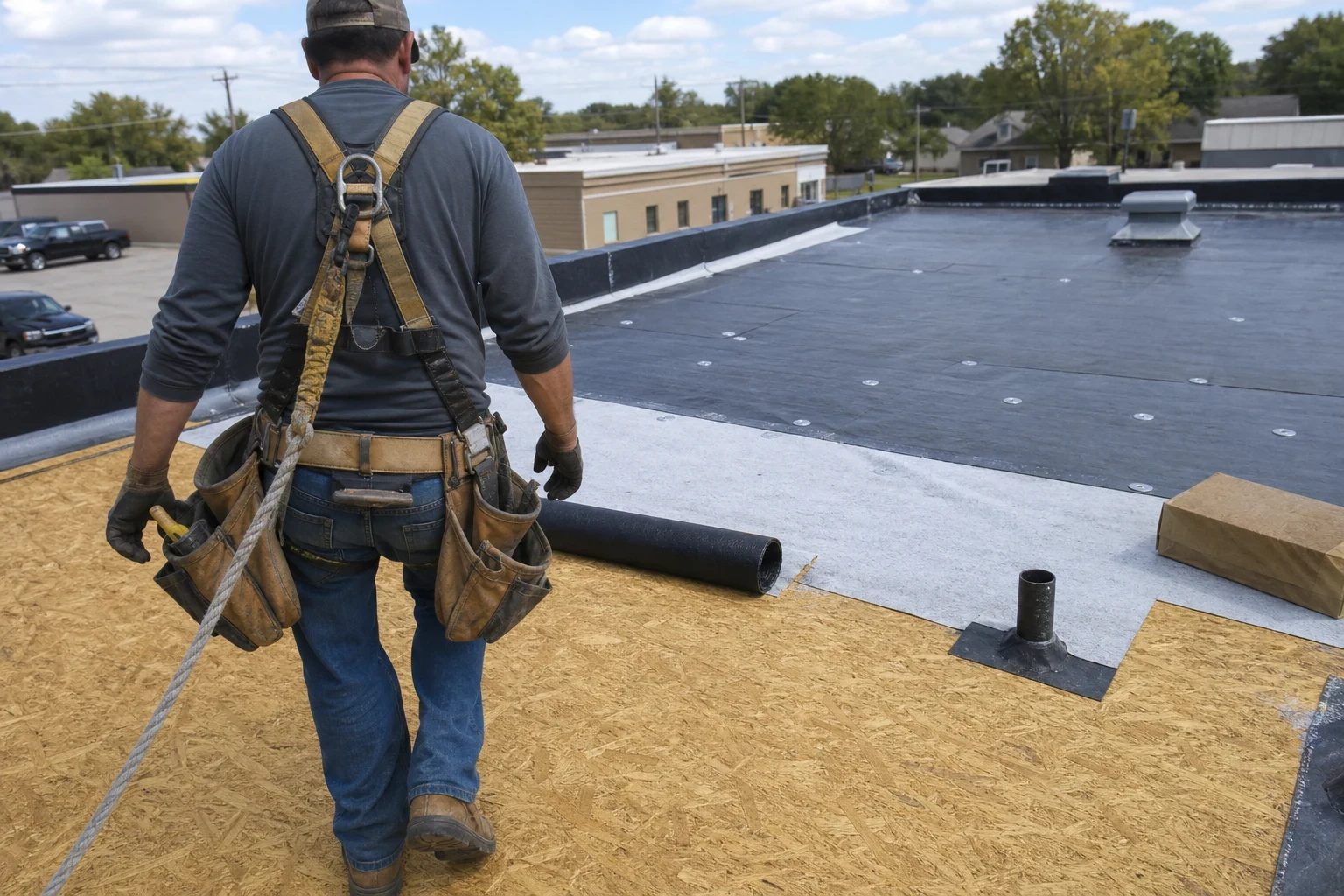
When a Commercial Roof Needs Replacing
Patching makes sense until the membrane itself is worn out, the insulation underneath is wet, or the same areas keep failing after every repair. At that point you are paying to chase leaks across a roof that has reached the end of its service life.
We hold an Oklahoma commercial roofing license and an Oklahoma general contractor license, which covers the roofing itself and the related work that often comes with it, such as replacing rotted deck sections or reworking rooftop unit curbs. We install single-ply TPO and EPDM, modified bitumen and metal panel systems.
If your roof still has good years left, our commercial roof repair page covers targeted fixes. We will tell you which one your building actually needs.
What the Replacement Includes
- Moisture check before we bid
- We take core cuts and look for wet insulation, which feels spongy underfoot and shows up as trapped water in the cores. Wet insulation decides whether a recover is allowed or a full tear-off is required.
- Tapered insulation for drainage
- Ponding water shortens membrane life and adds weight. We design tapered polyiso and crickets so water moves toward drains and scuppers instead of sitting for days after a storm.
- Fastening matched to wind exposure
- Corners and perimeters take the highest uplift loads in a windstorm. We tighten the fastener or plate pattern in those zones rather than using one spacing across the whole roof.
- Seams welded and probed
- On TPO we hot-air weld every lap and run a probe along it once it cools. A cold weld can look fine and still open up after a season of expansion and contraction.
- Flashing at every penetration
- Curbs, pipes, vents and parapet walls get flashed up and terminated with termination bar and counterflashing. These details are where most commercial leaks begin.
- Edge metal and cleanup
- New drip edge, gravel stop or coping is fastened to resist peel-off at the roof edge. Old material is hauled away and the site is swept for fasteners.
Signs Your Commercial Roof Is Due
Leaks in new places after repairs
When fixing one leak is followed by another a few feet away, the membrane is usually failing across a wide area.
Ponding that lasts more than two days
Standing water points to sagging deck, crushed insulation or poor slope. Over time it breaks down seams and coatings.
Shrinking or brittle membrane
Older EPDM can shrink and pull away from walls and curbs. Aged modified bitumen cracks and loses granules.
Soft spots underfoot
A spongy feel means the insulation is wet. Wet insulation loses its R-value and can rot the deck below.
Rusted or loose metal panels
On metal roofs, rust around fasteners and backed-out screws let water in at hundreds of small points at once.
How the Job Runs
- 1
Roof survey and written scope
We walk the roof, take cores, photograph problem areas and measure drains and penetrations. You get a written estimate that lists the system, insulation, tear-off or recover, and any deck work we expect.
- 2
Permit and scheduling
We pull the permit and plan the work around your operations, including where the dumpster and material staging go and which entrances stay open.
- 3
Tear-off in sections
We remove only what we can dry in the same day. Any damaged deck is replaced before insulation goes down, so nothing new is laid over a weak substrate.
- 4
Install and detail
Insulation, cover board and membrane go on, then the flashing, curbs, drains and edge metal. Seams are probed as we go, not just at the end.
- 5
Final walk and inspection
We walk the finished roof with you, share photos of the hidden layers and are on hand for the permit inspection.
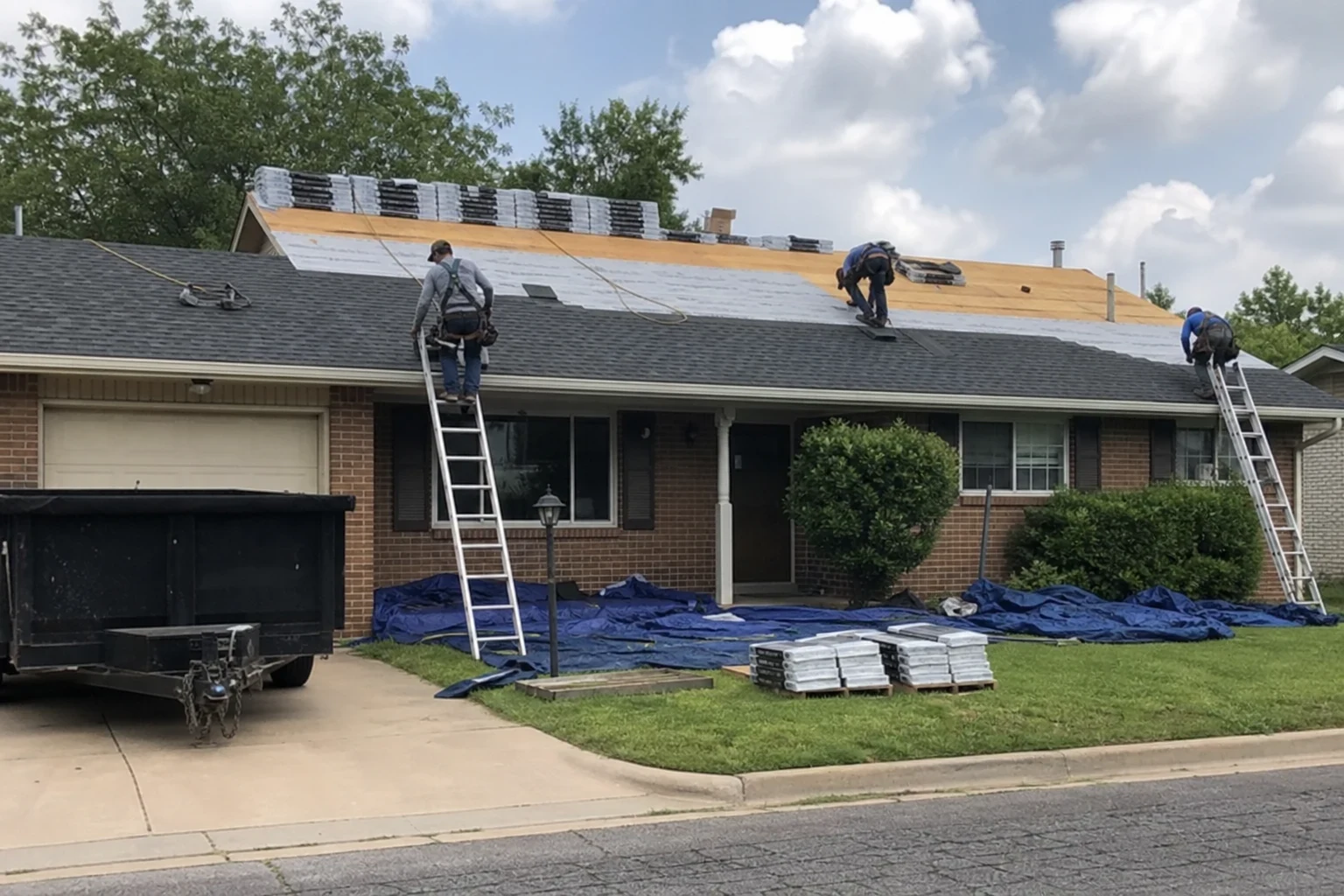
What Moves the Price
Commercial reroofs are priced per building, not from a chart. The size of the roof matters, but the condition of what is under the membrane and the number of details on top often move the number more.
- Tear-off or recover
- A recover over a dry, sound roof avoids removal and disposal costs. Wet insulation or two existing layers mean a full tear-off.
- System and insulation
- TPO, EPDM, modified bitumen and metal differ in material and labor. Raising insulation thickness or adding tapered slope adds cost but improves drainage and energy use.
- Penetrations and rooftop units
- Every curb, pipe and drain is hand-detailed work. A roof crowded with HVAC units costs more than an open one of the same size.
- Deck condition and access
- Rusted steel deck or rotted wood has to be replaced. Tight sites, tall walls or limited crane access add labor time.
Commercial Roof Replacement Questions
Something not covered here? (405) 807-9564
Can you install the new roof over the old one?
Sometimes. Code generally allows one recover over a single existing roof when the insulation is dry and the deck is sound. Our core cuts tell us which applies, and we will show you what we found before you decide.
Which membrane is right for my building?
TPO reflects heat and has welded seams, which suits many low-slope buildings. EPDM handles temperature swings well, and modified bitumen holds up to foot traffic. We recommend based on your slope, rooftop equipment and how the building is used.
Can my business stay open during the work?
In most cases, yes. We tear off only what we can dry in each day, keep debris away from entrances and plan noisy work with you ahead of time.
Do you also handle the house roof or gutters?
Yes. We also do residential roof replacement and gutters, and we can look at both while we are out for your commercial roof.
How long does a commercial reroof take?
It depends on the roof size, the number of penetrations and weather. We give you a working schedule with the estimate and update you if rain or wind pushes a day.
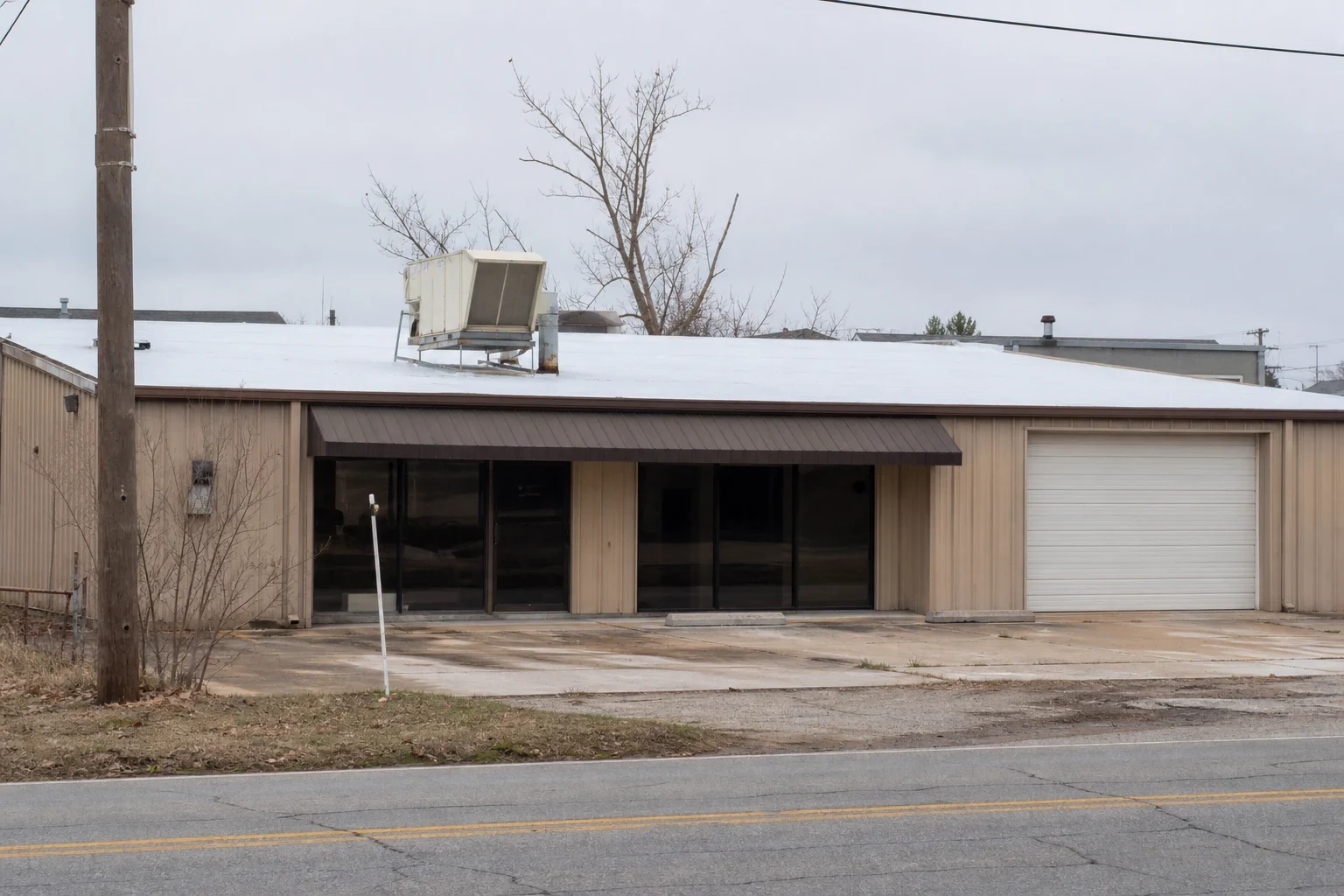
Get a Clear Scope for Your Building
Tell us about your building, its roof type and what you are seeing. We will set up a roof survey and walk you through what a replacement involves.