ServicesGutters
Gutters in Lexington, OK
We install continuous aluminum gutters and downspouts sized to how much water your roof actually sheds. Each run gets a measured slope, hidden hangers screwed into sound wood, and a clean tie-in under the drip edge, so water leaves your home where it should.
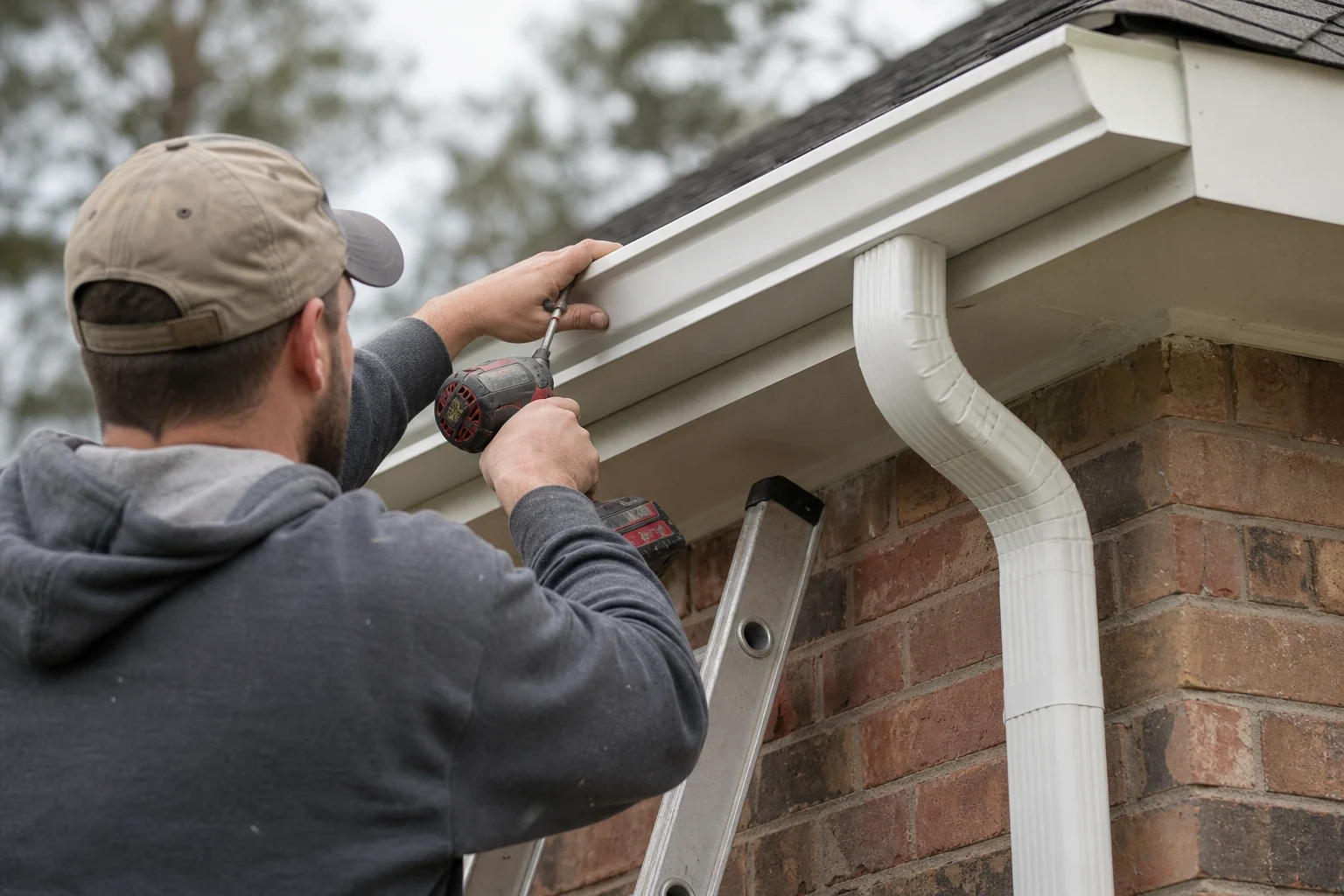
Gutters that drain because of how they are hung
A gutter only works if water reaches the outlet. That depends on small things: the slope of each run, where the downspouts sit, how the back of the gutter meets the roof edge, and what the hangers are fastened into. Get those wrong and you see overflow at the corners, stains on the siding and soft fascia within a few seasons.
We size the gutter and downspouts to your roof area and pitch, check the fascia before anything goes up, and set every run to fall toward its outlet. Hard Oklahoma downpours put a lot of water into a gutter in a short time, so outlet size and downspout count matter as much as the gutter itself.
Gutter work sits right at the roof edge, and we do it as a roofing company. Roofing Lexington holds an Oklahoma residential roofing license and an Oklahoma general contractor license, which covers the fascia, drip edge and roof-edge repairs that often come up once the old gutters are off.
What a gutter installation includes
One-piece runs formed on site
A machine on our trailer forms the gutter from aluminum coil, cut to fit each wall from end to end. That leaves no splices in the middle of a run, so the only connections are at corners and end caps, and we rivet and seal each of those.
Sizing for your roof
We weigh 5-inch against 6-inch K-style gutters based on the roof area draining into each run. Steep or large roof planes, and valleys that empty into one spot, usually need the larger profile or an extra downspout.
Hidden hangers into sound wood
Hangers are screwed through the fascia into the rafter tails or sub-fascia, set closer together where valleys concentrate water. Screws keep their grip where old spikes back out as the wood swells and dries.
Drip edge and gutter apron
The back of the gutter slides under the drip edge, or we add a gutter apron where none exists. That closes the gap that lets water run down behind the gutter and rot the fascia.
Downspouts and discharge
Outlets sit at the low end of each run, with 3x4 downspouts where the volume calls for them. At ground level, an extension or splash block moves the flow several feet out so it soaks in well clear of the slab.
Fascia repair and cleanup
If the old gutters were hiding rotted fascia, we show you and swap the bad boards before the new gutters go up. Old gutters, fasteners and scrap leave with us.
Signs your gutters need work
Overflow at inside corners
Water sheeting over the corner below a valley usually means the gutter is undersized for that roof plane or the outlet is too far away.
Standing water in the trough
Puddles a day after rain point to lost slope. Sagging hangers or a run that was hung level will hold water, and that weight pulls the gutter down further.
Gutters pulling off the fascia
A gap between the gutter and the board, or spikes backing out, means the fasteners have lost their grip. Often the wood behind them is soft.
Stains, peeling paint or rot behind the gutter
Streaks on the siding or dark, spongy fascia show water getting behind the gutter. A missing drip edge or apron is the usual cause.
Leaking seams and end caps
Older sectional gutters drip at every joint once the sealant dries out. Resealing helps for a while, but one-piece runs remove most of those joints.
Washed-out soil or a damp foundation
Erosion at a downspout or water pooling against the slab means discharge is too close to the house or the downspout is clogged.
From first visit to final water test
- 1
Measure and inspect
We walk every eave with a tape, write down each run's length, note which valleys and roof planes feed it, and check the fascia and drip edge. Anything that needs fixing before new gutters go on, you see in photos.
- 2
Written estimate by line
Gutter size, footage, downspouts, optional guards, and any fascia or drip edge work each get a separate line. If a board proves worse than expected once the old gutter is down, we show you before doing any added work.
- 3
Removal and prep
The old gutters come down, rotted fascia gets replaced, and we add or correct the drip edge or apron so the new gutter has a tight, dry edge to tuck behind.
- 4
Forming and hanging
Each run is rolled on site, and we snap a chalk line so it falls toward its outlets before the hangers go into solid wood. We rivet and seal the corners and end caps, then fasten each downspout to the siding with brackets.
- 5
Hose check and cleanup
We run a garden hose into every section to confirm water reaches the outlet and nothing pools. After that we pick up scrap and stray fasteners from the beds, lawn and driveway.
What moves the price of new gutters
Three things set most gutter prices: how many feet you need, which profile fits your roof, and the shape the roof edge is in. We price from tape measurements taken on site, not a rough guess, and each part shows up as its own line so you can see where the money goes.
- Linear footage and corners
- Total length sets the base. Each inside or outside miter needs its own cutting, riveting and sealing, so a house with many corners costs more than a simple rectangle with the same footage.
- Gutter and downspout size
- Six-inch gutters and 3x4 downspouts use more aluminum than 5-inch and 2x3, but on big or steep roof planes they keep up with heavy rain instead of spilling over the front lip.
- What the fascia and drip edge look like
- New gutters need solid boards and a proper edge to sit behind, so soft fascia gets replaced and a missing drip edge gets added first. That work is hard to judge until the old gutters come down, which is why we probe the wood and look closely at the edge on the first visit.
- Ladder work and site layout
- Second-story eaves, sloped ground under the roofline and tight side yards all add setup time and call for more careful ladder placement.
- Guards and extensions
- Gutter guards, longer downspout extensions and tie-ins to underground drains are optional, and each one is priced on its own line.
Gutter questions we hear
Something not covered here? (405) 807-9564
How do I know which gutter size my house needs?
The answer depends on the roof area feeding each run and how steep that roof plane is. Plenty of houses do fine with a 5-inch gutter, but a large plane or a valley dumping into one corner often needs a 6-inch profile or an added downspout. We measure every run and give you a size for each one, not one answer for the whole house.
Can you reuse my existing fascia?
Yes, as long as it is solid. Once the old gutter is off, we probe the boards. Soft or split pieces get replaced, because a hanger screwed into rotted wood will work loose no matter how good the gutter is.
Are gutter guards worth adding?
Where trees drop leaves and seeds on the roof, guards cut down on cleaning. They do not make a gutter maintenance-free, and some designs let water skip past in a hard downpour. If your roof sits under trees, we can walk through the types and what upkeep each one needs.
Do you install gutters when you replace a roof?
We can. Doing gutters along with a roof replacement lets us set the drip edge and gutter apron right in the same pass. We also handle gutters as a standalone job for homes in Lexington and nearby towns like Purcell, Noble and Norman.
How long does a gutter install take?
Once any fascia repair is finished, most single-family homes are done in a day. Larger homes, second-story runs or a lot of board replacement can stretch that, and we let you know before work begins.
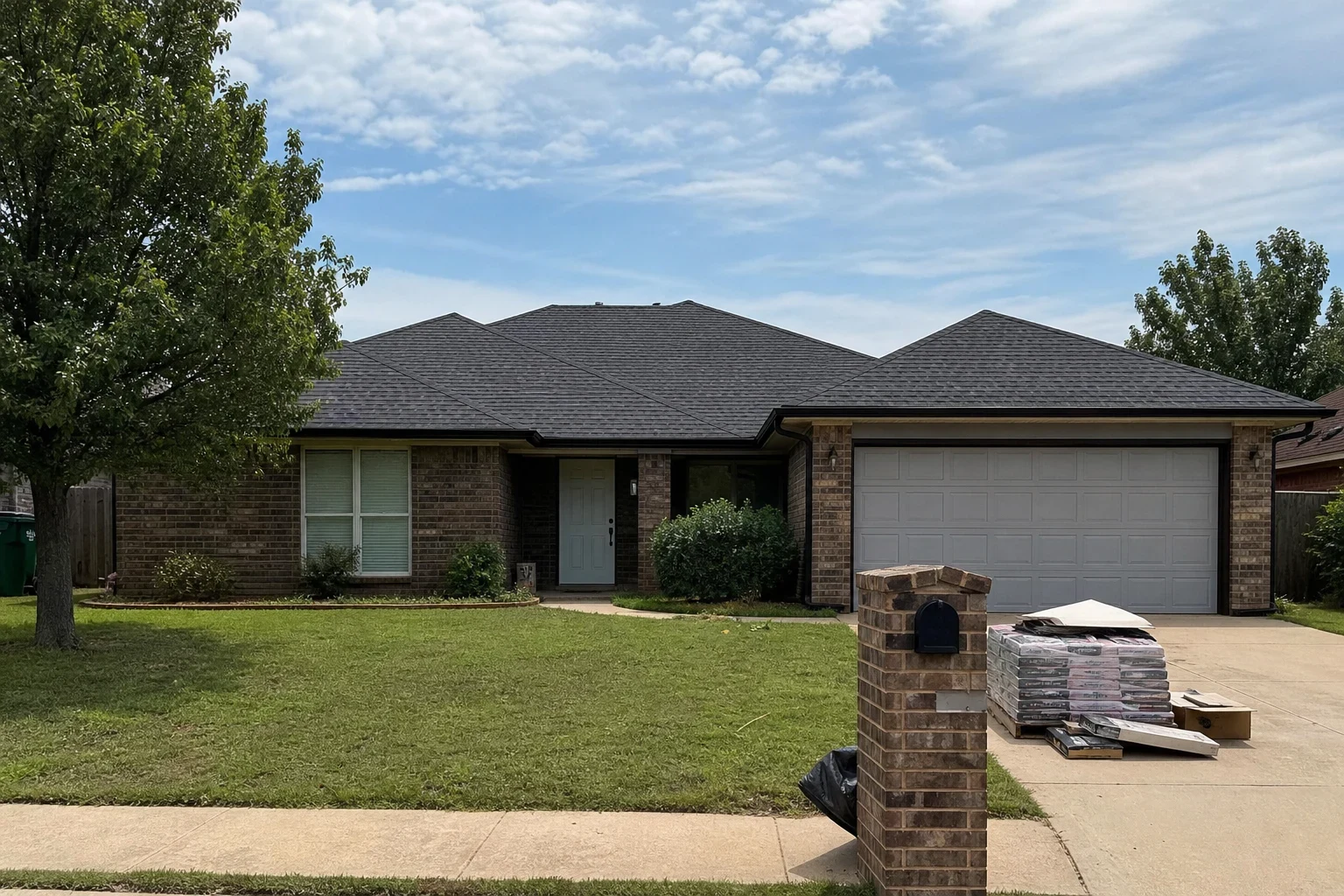
Get gutters that carry water where it belongs
Tell us about the overflow, sagging or stains you are seeing. We will set a time to measure, check the fascia and drip edge, and walk you through what each run needs.