ServicesRoof Inspections
Roof Inspections in Lexington
We walk your roof and check the small parts that decide how long it lasts: flashing at walls and chimneys, pipe boot seals, nail lines, ridge vents and the decking underneath. You get photos of what we found and a straight answer on whether anything needs work.
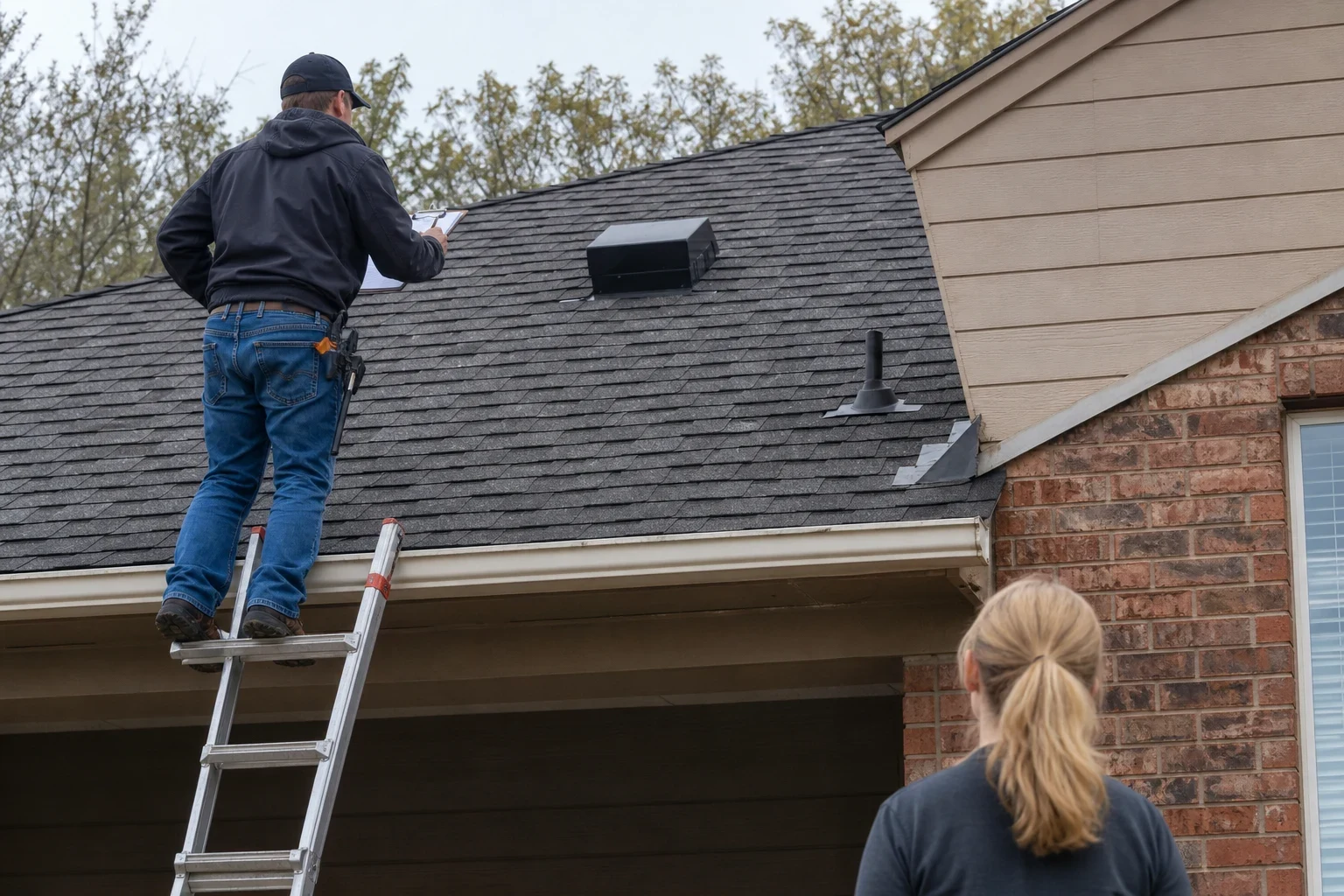
Why a Roof Inspection Is Worth Doing
Leaks rarely come from the open field of shingles. They start where two parts meet: a plumbing vent boot whose rubber has split, step flashing nailed through the face instead of tucked behind the siding, or shingles nailed above the strip so wind can pry them up. Catching these spots early keeps them in repair territory.
We read a roof the way someone who installs them reads it, because installing and fixing roofs is our daily work. Our company holds an Oklahoma residential roofing license and an Oklahoma general contractor license, so we know what a properly built roof system looks like and where shortcuts show.
Spring hail and wind in central Oklahoma are hard on shingles and seals. A check after a bad storm season, before a home sale or purchase, or once a roof is past 15 years old shows you its real condition before water reaches the ceiling.
The Parts of Your Roof We Check
- Shingle wear and granule loss
- We check for soft bruised spots, curled tabs, exposed fiberglass mat and patches where the granules are gone. Those granules block UV from reaching the asphalt, so bare areas age much faster than the rest of the roof.
- Flashing and penetrations
- Step flashing along walls, counterflashing at the chimney, valley metal and every pipe boot get a close look. Leaks most often begin here, from cracked rubber collars, lifted metal or sealant that has dried out.
- Fastening and seal strips
- We lift tabs carefully to see whether the factory adhesive strips actually sealed down, and we look for nails set above the nail line or working loose. Bad fastening is the usual reason shingles tear off in high wind.
- Ventilation and the attic side
- If there's access, we go into the attic to look for daylight through the decking, damp or stained sheathing, rusty nail points and blocked soffit vents. Heat and moisture trapped up there bake shingles from underneath and can rot the deck.
- Gutters, drip edge and fascia
- We note sagging gutter runs, plugged downspouts and missing drip edge. When water backs up behind a gutter it soaks the fascia board and the lowest row of decking, so our gutters work often ties in with the roof.
When Your Roof Should Get a Look
Grit collecting in the gutters
Some loose granules right after installation are expected. If you keep finding piles years later, the shingles are shedding the layer that protects them.
Stains on a ceiling
A brown spot inside is often several feet from where water actually gets in, because it travels along the rafters first. Tracking it down means checking the roof and the attic.
A recent hail or wind storm
Hail bruising usually can't be seen from the ground. If roofs on your street are being checked, yours went through the same storm.
Selling or buying your home
A roof-focused inspection goes deeper than a general home inspection. Buyer and seller both get clear facts about remaining life and any repairs needed.
Creased or missing shingles
A fold line across a tab shows it flapped in the wind and lost its seal. Shingles like that are usually the next ones to blow off.
How the Inspection Goes
- 1
Set a time by phone
We ask about the roof's age, any leaks you've seen and recent storms, so we know what to look for when we arrive.
- 2
Ground and roof walk
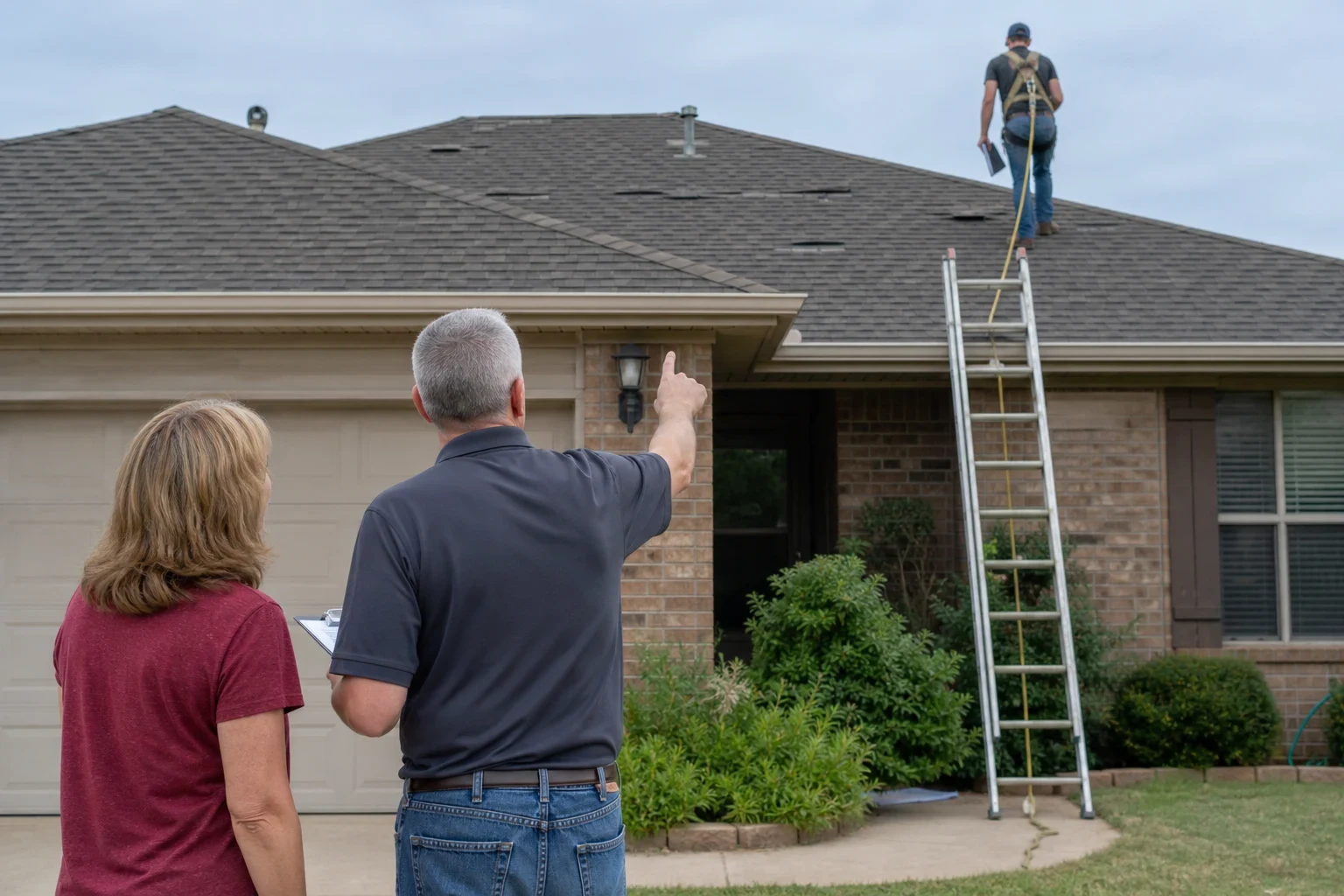
We start at the eaves and gutters, then get on the roof when pitch and conditions are safe. Every slope, valley and penetration gets checked, and we photograph anything worth noting.
- 3
Attic check where possible
If you have attic access, we look at the underside of the decking and the ventilation path. This is often where a slow leak or a moisture problem shows up first.
- 4
Your findings, explained
We walk you through the photos and tell you plainly what's fine, what should be watched and what needs work now. If a repair makes sense, we say so; if the roof is near the end of its life, we'll explain why and talk through roof replacement.
What Sets the Price of a Roof Inspection
The price of an inspection tracks the hours it takes to check your roof properly, both on the shingles and in the attic. When you call, we'll ask a few questions about your home and tell you which of these factors apply before anything goes on the calendar.
- Square footage and roof shape
- A plain two-slope gable roof is quick to cover. Every added hip, valley, dormer and chimney is another joint we have to look at closely.
- Steepness and stories
- A steep pitch or a second story means more safety setup and slower footing on the slope. That extra care adds time.
- Getting into the attic
- A clear hatch in a hallway closet makes the underside check fast. A hatch behind stored boxes or a cramped crawl space slows it down.
- How much reporting you need
- A short walk-through with a few photos is lighter work than a full photo set organized for a home sale or a talk with your insurer.
Common Questions About Roof Inspections
Something not covered here? (405) 807-9564
Are you licensed to inspect and work on roofs?
Yes. Our company holds an Oklahoma residential roofing license, an Oklahoma commercial roofing license and an Oklahoma general contractor license. The person checking your roof is also qualified to repair what turns up.
Is this just a way to sell me a new roof?
No. Plenty of the roofs we check only need a small fix, and some need nothing. Every problem we mention comes with a photo so you can judge it yourself, and we only bring up replacement when the shingles or decking have actually reached the end of their life.
Can an inspection help with an insurance claim?
It gives you photographed, written facts about hail or wind damage to bring to your insurer. We're glad to explain how claims usually move along, but the coverage decision belongs to the adjuster. If we confirm storm damage, our storm damage repair page explains the next steps.
How long does it take?
That depends on the roof's size and pitch, how many vents and pipes come through it, and whether we can reach the attic. On a typical single-story home it takes a modest part of the day. The only prep we ask for is a clear path to the attic hatch.
Do you inspect commercial roofs too?
Yes. We check low-slope and commercial systems as well, looking at membrane condition, seams, drains and curbs. Our commercial roof repair and commercial roof replacement pages cover that work.
Find Out What Your Roof Needs
A careful look now costs far less than chasing a leak later. Tell us about your roof and we'll set a time to check it, from Lexington out to Purcell, Noble and Norman.